


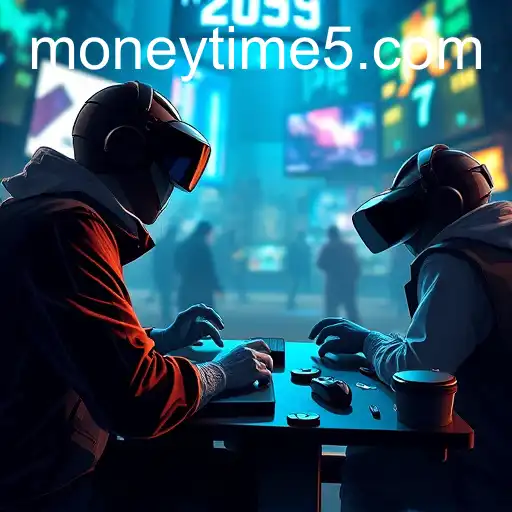
Explore how 'money time' revolutionizes E-gaming and impacts digital economies.
The world of E-Gaming continues to break new ground as we enter 2025, with 'money time' emerging as a pivotal concept that reshapes the landscape of online gaming. This term refers to the strategic monetization period within gaming environments where players' skills translate directly into digital assets or currencies. Over recent years, with advancements in blockchain technology and the growing acceptance of cryptocurrencies, 'money time' has evolved beyond a mere game mechanic into a formidable economic driver.
The surge in popularity of such models in E-Gaming has contributed to the sector's unprecedented growth, becoming a multi-billion dollar industry that rivals traditional entertainment sectors. Many platforms now integrate seamless methods for players to earn, trade, and invest in digital currencies, blurring the lines between real-world economies and virtual realities. Simultaneously, this burgeoning trend has sparked debates regarding financial regulation, digital asset ownership, and the socioeconomic implications of making gaming a viable income source.
One of the recent catalysts in the integration of 'money time' within games is the endorsement from large corporations and financial institutions. These entities are beginning to recognize gaming platforms as legitimate spaces for economic engagement. Consequently, partnerships have blossomed between game companies and fintech firms, fostering innovative solutions that enhance player experience and economic interaction.
On the player side, communities have formed ecosystems where skilled gamers can thrive, earn, and even make a living by playing. This not only democratizes the space for gamers regardless of their geographical location but also invites scrutiny and calls for fair-play assurances and transparent algorithms. As we push forward, the collaborative efforts between game developers, economists, and legislators will be crucial in shaping the ethical and structural framework that supports this new-economic-game world.
However, this dynamic interplay between gaming and economics is not without challenges. Concerns about addiction, financial risk for young or inexperienced players, and the environmental impact of blockchain technologies loom large. Industry stakeholders must navigate these issues delicately to ensure a sustainable and equitable future for all participants involved.
As 'money time' continues to redefine the possibilities within E-Gaming, it poses an intriguing question: Could gaming be the foundation for future economic structures? Only time will tell, but for now, its influence is undeniable and steadily growing.

