


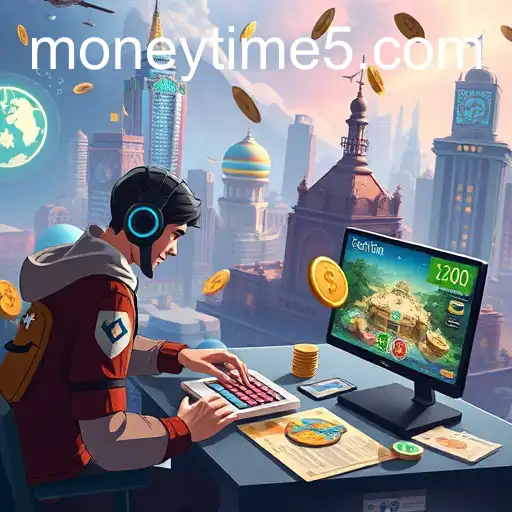
Exploring the impact of virtual economies on gaming culture and industry dynamics in 2026.
As the world charges into 2026, the landscape of the gaming industry continues to evolve at an unprecedented pace. A significant factor contributing to this evolution is the rise of virtual economies within online gaming platforms. The keyword 'money time' has become synonymous with strategies that blend real-time financial incentives with immersive gameplay, captivating millions worldwide.
The concept of virtual economies isn't entirely new, but their integration into mainstream gaming has significantly altered how players engage with online games. Titles like 'EconCraft' and 'Trade Worlds' exemplify this trend, where the in-game economy is as complex and dynamic as modern financial markets. These games offer players the opportunity to earn, trade, and invest virtual currencies, blurring the lines between entertainment and economic education.
Developers are now crafting experiences that require players to apply real-world economic principles, turning games into platforms for financial literacy. This trend is particularly appealing to the younger generation, who are eager to learn about entrepreneurship and investment in a digital-first world. It’s a fascinating transformation that highlights how gaming can be both educational and entertaining.
However, these virtual economies raise several questions. Financial regulators and industry experts debate the implications of blending real and virtual finances. Concerns about virtual money laundering and economic impacts mirror those faced by cryptocurrency markets. Yet, proponents argue that these platforms provide a safe environment to experiment with economic strategies.
The dynamics of the gaming industry are radically shifting. As virtual economies gain traction, they open new revenue streams for developers and players alike. For gamers, the promise of converting in-game achievements into real-world value adds an exciting dimension to their digital adventures. Meanwhile, developers focus on maintaining the delicate balance between in-game economics and player engagement.
As we move forward into this new era, the impacts of virtual economies on the gaming sector and beyond are expected to deepen. Time will reveal whether this trend is a sustainable financial model or merely a passing phase in the ever-changing ecosystem of the gaming world.

